Hemp-Derived THC and CBD Vaping: What Every UK Vaper Needs to Know
Hemp-derived THC and CBD vaping products occupy a unique legal space in the UK: CBD vapes are legal and widely available, while THC vapes remain controlled substances regardless of their source. The confusion stems from how “hemp-derived” is marketed, particularly by US retailers like https://www.exhalewell.comwhere hemp-derived delta-8 and delta-9 THC products exist in a federal grey area that simply doesn’t apply here. In the UK, any THC content above 0.2% in the plant or 1mg per container in the finished product makes a vape illegal under the Misuse of Drugs Act, full stop.
This matters because the vaping community has grown rapidly as smokers seek alternatives, and CBD vapes have become a popular choice for those wanting the potential wellness benefits without intoxication. But online shopping exposes UK vapers to products that might be legal where they’re sold but illegal to import or possess here. The terminology itself creates problems: “hemp” sounds harmless, “derived” suggests natural purity, and the blurring of CBD with THC leaves many newcomers uncertain about what they can safely and legally buy.
Understanding these distinctions isn’t just about staying on the right side of the law. It’s about making informed choices that suit your needs, whether you’re exploring vaping for the first time or you’re an experienced vaper curious about cannabinoid products. The UK market offers legitimate, tested CBD vape options, but only if you know what to look for and what red flags to avoid. This guide will walk you through the legal framework, explain the practical differences between hemp-derived compounds, and help you identify safe, compliant products in 2026.
Understanding Hemp-Derived Cannabis: The Basics
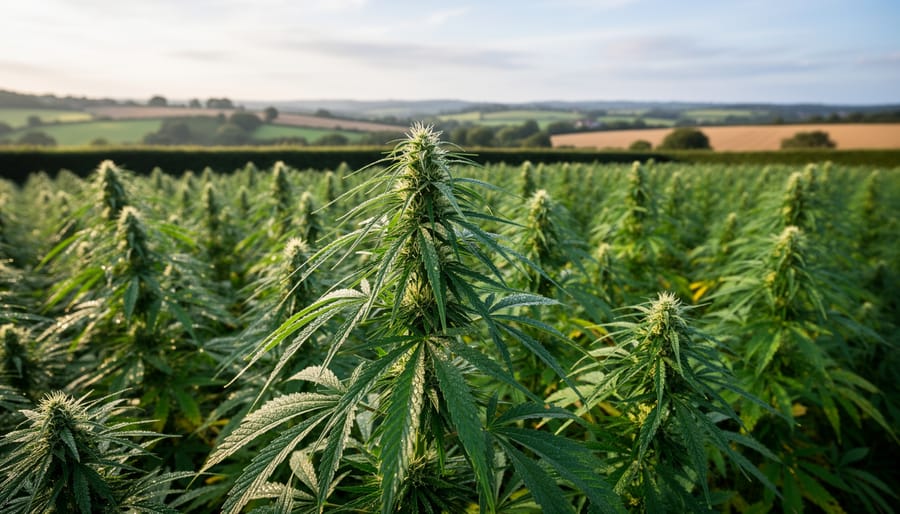
Hemp and marijuana come from the same plant species, Cannabis sativa, but they’re not the same thing. The key difference lies in their THC content and how we use them. Hemp is legally defined in the UK as cannabis containing no more than 0.2% THC by dry weight, grown primarily for industrial purposes and CBD extraction. Marijuana, on the other hand, contains higher THC levels and remains a controlled substance under the Misuse of Drugs Act 1971.
When we talk about hemp-derived cannabis products, we’re referring to extracts and compounds taken from legal hemp plants. These products have exploded in popularity because they offer access to cannabinoids like CBD without the legal complications or psychoactive effects associated with marijuana.
To make sense of what you’ll find on the market, here are the essential terms:
- Hemp
- Cannabis plants containing 0.2% THC or less, legally grown for fibre, seeds, and cannabinoid extraction in the UK.
- Marijuana
- Cannabis plants with higher THC content (typically 5-30%), classified as a controlled substance in the UK.
- CBD (Cannabidiol)
- A non-intoxicating cannabinoid found in hemp that interacts with the body’s endocannabinoid system, legal in the UK when derived from approved hemp strains.
- THC (Tetrahydrocannabinol)
- The primary psychoactive compound in cannabis that produces a “high”, tightly controlled in the UK with only trace amounts (under 0.2%) permitted in hemp products.
- Full-Spectrum
- Hemp extract containing CBD plus other cannabinoids, terpenes, and trace THC (under legal limits), believed to create an “entourage effect” where compounds work together.
- Broad-Spectrum
- Similar to full-spectrum but with THC completely removed, offering multiple cannabinoids without any THC presence.
- Isolate
- Pure CBD with all other plant compounds removed, typically 99% cannabidiol with no other cannabinoids or terpenes.
The surge in hemp-derived products stems from people seeking natural wellness options without breaking the law or getting intoxicated. Since the UK legalized CBD products in 2016, vapers have embraced them as an addition to their lifestyle. Hemp cultivation has expanded globally, making quality CBD more accessible and affordable, whilst advances in extraction technology have created cleaner, more consistent products than ever before.
The Legal Landscape for Hemp-Derived Vaping in the UK
Navigating the legal landscape around hemp-derived vaping in the UK can feel confusing at first, but the rules are actually quite straightforward once you understand them. Let’s break down what’s legal, what’s not, and why it matters for your vaping choices.
CBD vaping products are completely legal in the UK, provided they contain no more than 0.2% THC. This limit isn’t arbitrary, it’s set by the Misuse of Drugs Regulations 2001, which classifies cannabis and THC as controlled substances whilst creating an exemption for hemp-derived products that meet this threshold. You can legally purchase, possess, and vape CBD e-liquids from high street shops, online retailers, and specialist vape stores across the country. The key is ensuring your product comes from a reputable source that can demonstrate compliance with this THC limit through proper documentation.
THC vaping, on the other hand, remains illegal regardless of how the THC was extracted. Unlike some other countries where certain hemp-derived THC variants have found legal pathways, UK law makes no distinction between THC from marijuana and THC from hemp. If a vape product contains more than 0.2% THC, it’s classified as a controlled substance under the Misuse of Drugs Act 1971. Possessing or selling such products can result in criminal charges, with penalties ranging from fines to imprisonment depending on the circumstances.
This is why purchasing from reputable suppliers matters enormously. Legitimate UK vendors test their products through independent laboratories and provide certificates of analysis proving THC content stays below the legal threshold. They follow Food Standards Agency guidelines for CBD products and ensure transparent labelling. Unfortunately, the market does have its share of dodgy operators selling mislabelled or untested products, some containing illegal levels of THC, others containing no CBD at all.
Always check that your chosen supplier can provide recent lab reports and operates within UK regulations. If you’re buying CBD vape products from overseas sellers, you’re taking a risk. Those products may not comply with UK law, and customs can seize them. Stick with UK-based vendors who understand and follow our specific regulations, and you’ll stay on the right side of the law while enjoying your hemp-derived vaping experience safely.
CBD Vaping: Benefits, Effects, and What to Expect
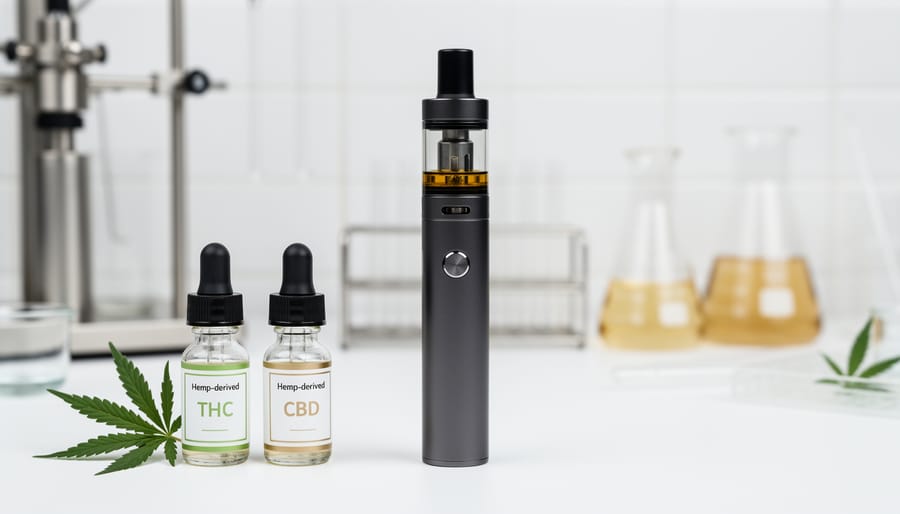
Many vapers turn to CBD for reported relaxation and stress relief without the intoxicating effects associated with THC. People prefer vaping CBD because it offers faster onset compared to oils or edibles, typically taking effect within minutes rather than an hour or more. This speed makes it easier to gauge how much you need and adjust accordingly.
CBD won’t get you high. Users describe the sensation as subtle, a sense of calm or taking the edge off anxiety without impairing cognitive function or altering perception. Some report better sleep quality, reduced muscle tension after exercise, or simply feeling more balanced throughout the day. These effects vary considerably between individuals, and it’s worth managing expectations: CBD isn’t a miracle cure, and research is still catching up with anecdotal reports.
The bioavailability advantage of vaping is significant. When you inhale CBD vapour, it enters your bloodstream through the lungs, bypassing the digestive system where much of the compound gets broken down. Estimates suggest vaping offers 40-50% bioavailability versus 10-20% for oral consumption, meaning you need less product to achieve similar effects. This efficiency often makes vaping more cost-effective over time, despite higher initial device costs.
Start with a low dose if you’re new to CBD vaping, perhaps two or three short puffs, and wait 15-20 minutes to assess how you feel. You can always vape more, but you can’t undo taking too much. Some people feel nothing initially and need to use CBD consistently for several days before noticing benefits, a phenomenon sometimes called the “priming effect.”
Common reasons vapers choose CBD include managing everyday stress, supporting post-workout recovery, addressing occasional sleep difficulties, and seeking a non-intoxicating way to unwind. The key is approaching it with realistic expectations: CBD may support your wellbeing, but it’s not pharmaceutical medicine. Effects are typically gentle and cumulative rather than dramatic and immediate.
Hemp-Derived THC: Legal Variations and Considerations
You may have seen products like Delta-8 THC or Delta-10 THC advertised online, often marketed as “legal hemp-derived THC” in countries like the United States. These are cannabinoids chemically synthesized from CBD extracted from hemp, creating compounds with psychoactive effects similar to traditional Delta-9 THC (the compound that produces a high in marijuana). While they technically originate from legal hemp, the synthesis process creates controlled substances under UK law. The differences between these variants and standard CBD vs Delta 8 are significant, particularly when it comes to effects and legal status.
In the UK, all forms of THC remain controlled substances under the Misuse of Drugs Act 1971, regardless of their source or how they’re produced. This means Delta-8, Delta-10, THC-O, HHC, and any other psychoactive cannabinoid variants fall under the same legal restrictions as traditional cannabis. The fact that these compounds can be synthesized from legal hemp plants doesn’t change their controlled status here. UK law doesn’t distinguish between “natural” and “synthetic” THC variants when it comes to legality.
The confusion arises because some countries, particularly certain US states, have created legal loopholes allowing these hemp-derived THC variants to be sold. Online retailers may ship internationally or use vague language suggesting these products are universally legal. They aren’t. Importing, possessing, or using these products in the UK carries the same legal risks as any other controlled substance. Even trace amounts above the 0.2% THC limit can render a product illegal.
If you’re curious about hemp-derived vaping, stick with properly tested CBD products from UK-based vendors who understand and comply with our regulations. The legal CBD market offers legitimate options without the legal risks or quality concerns that come with unregulated THC variants marketed through grey-market channels.
Choosing Quality Hemp-Derived Vape Products
Lab Testing and Certificates of Analysis
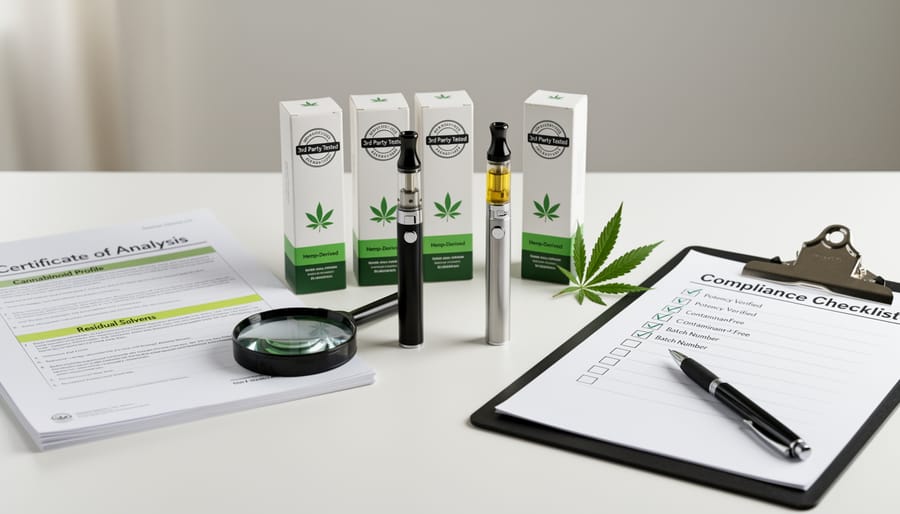
Third-party lab testing is your safeguard against substandard or potentially dangerous products. Unlike manufacturer self-testing, independent laboratories have no financial stake in the results, providing honest analysis of what’s actually in your vape liquid. A Certificate of Analysis (COA) serves as proof that a product has been tested by an accredited lab and meets claimed specifications.
A legitimate COA should clearly list cannabinoid content (confirming CBD levels and verifying THC stays below the UK’s 0.2% legal limit), screen for pesticides and heavy metals, check for residual solvents from extraction, and test for microbial contaminants like mould or bacteria. The document should include the lab’s name, testing date, batch number matching your product, and specific results for each test category rather than vague “pass/fail” marks.
Just as understanding e-liquid ingredients helps you make informed nicotine vaping choices, reading a COA empowers you to verify hemp-derived products. Reputable UK vendors make COAs easily accessible on their websites or provide them upon request. If a company hesitates to share lab results or claims testing isn’t necessary, walk away. Your health depends on knowing exactly what you’re inhaling.
Extraction Methods and Purity
The method used to extract CBD from hemp plants significantly impacts both the purity and quality of what you’re inhaling. CO2 extraction, often called supercritical CO2 extraction, is considered the gold standard. It uses pressurized carbon dioxide to pull cannabinoids from the plant without leaving behind harmful solvents or chemicals. This process preserves the beneficial compounds while removing unwanted materials like chlorophyll and plant waxes.
Other extraction methods include ethanol extraction, which is effective but may leave trace solvent residues if not properly purged, and hydrocarbon extraction using butane or propane. These cheaper methods can work well when done correctly, but they carry higher risks of contamination if manufacturers cut corners.
Why does this matter for your vaping experience? Poorly extracted CBD may contain residual solvents, heavy metals, or pesticides that you definitely don’t want in your lungs. It can also taste harsh or burnt and may clog your coils faster due to plant material residue. Quality extraction means cleaner flavour, smoother hits, and peace of mind that you’re inhaling a pure product. Always check whether the vendor specifies their extraction method, transparency here is a good sign they’re not hiding anything.
Full-Spectrum vs Broad-Spectrum vs Isolate
When choosing a CBD vape product, you’ll encounter three main types. CBD isolate contains pure CBD (99%+) with all other cannabinoids and plant compounds removed, ideal if you want consistency and zero THC for employment drug testing. Broad-spectrum keeps multiple cannabinoids, terpenes and flavonoids from the hemp plant but removes THC entirely, offering what’s called the “entourage effect” (where compounds work together) without legal concerns. Full-spectrum contains everything the plant offers, including trace THC up to the legal 0.2% limit.
Most UK vapers find broad-spectrum hits the sweet spot, you get the enhanced benefits of multiple cannabinoids working together whilst staying completely THC-free. Isolate suits those wanting predictable effects or maximum caution around THC. Full-spectrum users report the strongest entourage effect, though that tiny THC amount means checking your product’s COA becomes essential.
Your choice depends on whether you prioritise the potential enhanced benefits of multiple compounds or prefer the simplicity and guaranteed THC-absence of isolate.
Safety and Best Practices for Hemp-Derived Vaping

Safety is paramount when exploring hemp-derived vaping products, especially in a market where quality and regulation can vary significantly. While CBD vaping is legal in the UK when products contain less than 0.2% THC, not all products on the market meet safety standards or comply with regulations.
Identifying and Avoiding Contaminants
The primary safety concern with hemp-derived vape products centres on potential contaminants. These can include pesticides from hemp cultivation, residual solvents from extraction processes, heavy metals from poor-quality hardware, and cutting agents like vitamin E acetate (which has been linked to serious lung injuries). Some manufacturers use cheaper extraction methods or source hemp from unregulated farms, leading to contaminated end products. This is why third-party lab testing is not optional, it’s essential. Never purchase products that don’t provide accessible certificates of analysis showing they’ve been tested for contaminants, cannabinoid content, and THC levels.
Device Selection and Maintenance
Not all vaping devices are suitable for hemp-derived products. CBD and other cannabinoid vape liquids often have different viscosity levels than standard e-liquids, requiring compatible devices. Sub-ohm tanks and high-wattage devices can degrade cannabinoids and produce harsh vapour, while pod systems or mouth-to-lung devices typically work better. Keep your device clean, cannabinoid-rich liquids can leave more residue than standard e-liquids, and proper maintenance ensures consistent performance and flavour.
Starting Safely: A Beginner’s Checklist
If you’re new to hemp-derived vaping, follow this safety-first approach:
- Verify the product’s COA before purchasing and confirm THC levels are under 0.2% for UK legality.
- Start with a low concentration (300-500mg CBD for a 10ml bottle) to gauge your response.
- Take one or two small draws and wait 15-20 minutes to assess effects before continuing.
- Use a clean, properly functioning device compatible with the liquid’s viscosity.
- Stay hydrated, as cannabinoid vaping can cause mild dry mouth.
- Keep a log of your dosage and effects to find your optimal level.
Consult our beginners’ guide for device fundamentals if you’re completely new to vaping.
Black Market Risks
Perhaps the biggest safety threat comes from black market or grey market products. These unregulated products may contain dangerous additives, inaccurate cannabinoid levels, or illegal amounts of THC. Stick to established UK vendors who can demonstrate compliance with UK regulations, provide full transparency about sourcing and testing, and offer proper customer support. If a deal seems too good to be true or a vendor can’t provide documentation, walk away.
Common Questions from the Vaping Community
Many UK vapers have similar concerns when considering hemp-derived CBD products alongside their regular vaping routine. Here are the answers to questions we hear most often in the community.
Can I use CBD vape juice in my regular vape device? Generally, yes, but it depends on your device. CBD e-liquids designed for vaping work well in standard vape tanks and pod systems. However, some CBD products are formulated as oils for oral consumption and should never be vaped, as they can damage your lungs. Always check that any CBD product is specifically labelled for vaping before using it in your device. If you have more CBD questions about compatibility, start with CBD vape juice that matches your device’s specifications.
Will vaping CBD make me fail a drug test? Legal UK CBD products contain less than 0.2% THC, which is a trace amount. Most workplace drug tests don’t screen for CBD itself. However, there’s a small possibility that regular, heavy use of full-spectrum CBD could lead to detectable THC levels in extremely sensitive tests. If drug testing is a concern for your work, consider broad-spectrum or CBD isolate products, which contain no THC at all.
Can I mix CBD vape juice with my nicotine e-liquid? While technically possible, it’s not recommended. Mixing can affect the proper ratios of both products and make it difficult to track your CBD intake accurately. You’re better off using separate devices or vaping them at different times. Many vapers keep one device for nicotine and another for CBD to maintain control over their usage.
Does CBD interfere with nicotine’s effects? There’s no evidence that CBD significantly interferes with nicotine. Some vapers actually report that CBD helps them manage nicotine cravings, though experiences vary. Both can be part of your vaping routine without negative interactions.
Are there any side effects specific to vaping CBD? CBD is generally well-tolerated, but some people experience dry mouth, drowsiness, or mild dizziness when starting out. These effects typically diminish as your body adjusts. Start with low doses and increase gradually to find what works for you.
Hemp-derived CBD vaping offers UK vapers a legal and accessible way to explore cannabinoid products, provided you stick to products containing less than 0.2% THC and purchase from reputable, compliant sources. Throughout this guide, we’ve covered the fundamentals: understanding what hemp-derived cannabis actually means, navigating the UK’s clear legal framework, recognizing quality products through lab testing and certificates of analysis, and following safety best practices to protect your health.
The key takeaway? Education and vigilance are your best tools. The hemp-derived vaping market continues to evolve, with new products and marketing claims appearing regularly. Always verify what you’re buying, question claims that sound too good to be true, and remember that if a product promises legal THC effects in the UK, it’s almost certainly misleading or illegal.
Quality matters enormously in this space. Third-party lab testing isn’t just a nice-to-have feature, it’s essential proof that your product is what it claims to be and safe to use. Don’t cut corners when it comes to where you source your hemp-derived vape products.
We’d love to hear about your experiences with CBD vaping. What products have worked for you? What challenges have you faced? Sharing knowledge strengthens our community and helps fellow vapers make informed decisions. Whether you’re just starting to explore hemp-derived options or you’ve been vaping CBD for years, your insights can help others navigate this space safely and confidently.